
Cheesy Sourdough Bread Recipe- Perfect Loaf
Sourdough cheese bread isn’t just a loaf; it’s a warm hug on a plate, a testament to patience, and a symphony of tangy, cheesy goodness. There’s something undeniably comforting about the aroma that fills your kitchen as this beautiful bread bakes, a scent that promises a crusty exterior giving way to a soft, chewy interior studded with pockets of melted, savory cheese. People adore this bread because it elevates simple ingredients into something truly extraordinary. It’s the perfect companion to a hearty soup, a delightful base for a gourmet sandwich, or simply divine enjoyed on its own, perhaps with a smear of good butter. What makes our sourdough cheese bread particularly special is the unique tang imparted by the sourdough starter, which plays beautifully against the sharp, melty cheese, creating a depth of flavor that store-bought varieties simply can’t replicate. Get ready to experience bread baking at its most rewarding!
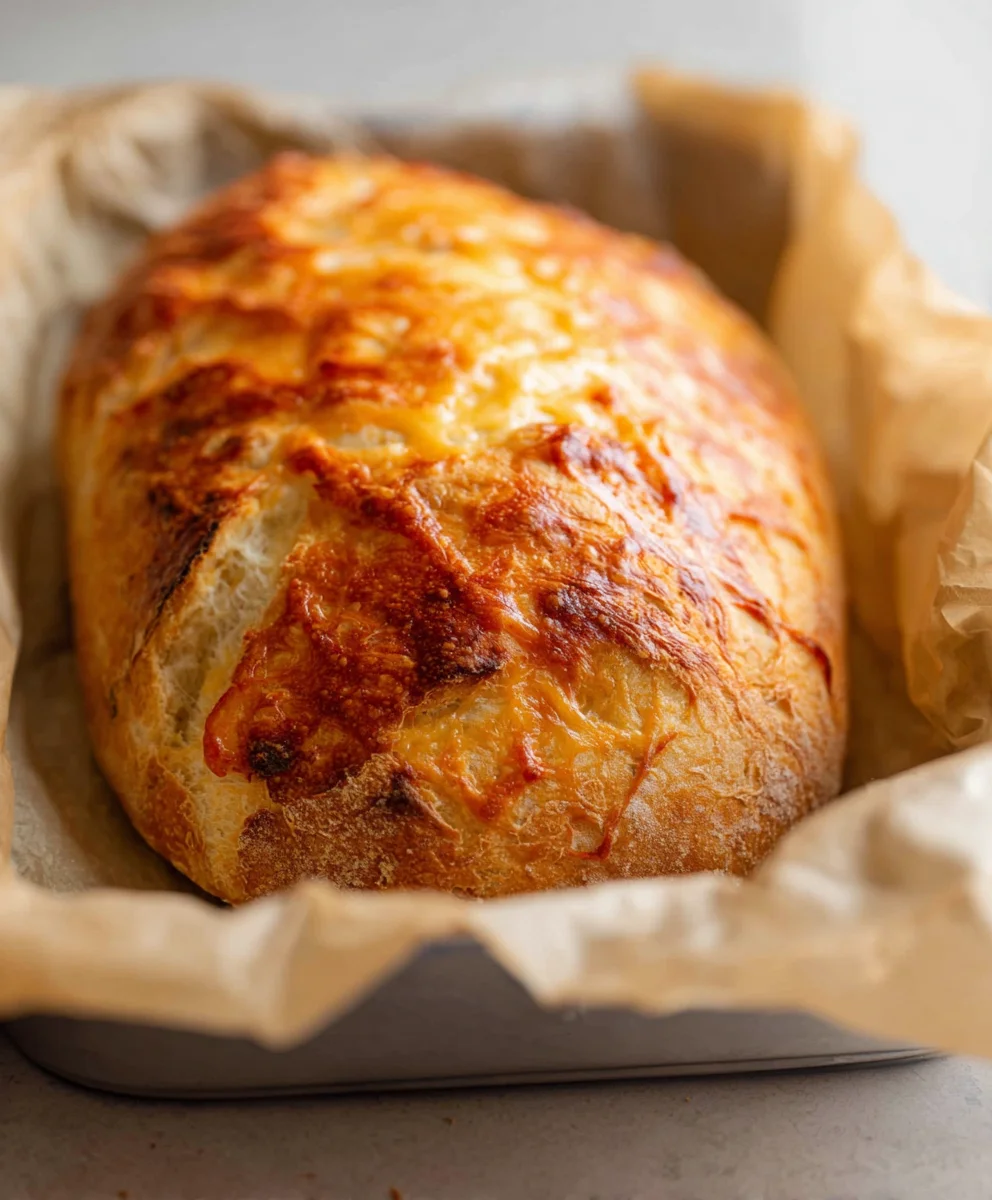
Ingredients:
- 1 cup milk (or 244 g water)
- 1/2 cup active sourdough starter (or 113 g)
- 1 large egg
- 1 tablespoon sugar (or 12 g)
- 1 teaspoon salt (or 5 g)
- 1 teaspoon garlic powder (or 3 g)
- 3 cups flour (or 420 g)
- 4 tablespoons butter (or 56 g), softened
- 2 cups shredded cheddar cheese
- Optional: 1 egg yolk for egg wash, and a pinch of flaky salt for topping
Mixing the Dough
Let’s begin extract by creating our flavorful Sourdough Cheese Bread dough. In a large mixing bowl, combine the milk (or water if you’re using it as a substitute) and your active sourdough starter. Whisk these together gently until they are well incorporated. The starter is what will give our bread its characteristic tangy flavor and wonderful texture. Next, add the large egg to the bowl. This will contribute richness and help bind the dough together. Now, it’s time for the sweetness and savory notes: add the tablespoon of sugar, the teaspoon of salt, and the teaspoon of garlic powder. Give this mixture another good stir to ensure all the liquid ingredients and seasonings are evenly distributed. This forms the base of our flavorful dough.
Incorporating the Flour and Butter
Gradually add the flour to the wet ingredients, about a cup at a time, mixing after each addition. You can use a stand mixer with a dough hook for this, or you can mix it by hand with a sturdy spoon or spatula. Once the dough starts to come together and pull away from the sides of the bowl, it’s time to introduce the butter. Make sure your butter is softened to room temperature; this makes it much easier to incorporate. Add the softened butter, a tablespoon at a time, and continue mixing. The dough might look a bit greasy and shaggy at first, but keep mixing. The butter will be absorbed into the dough, creating a softer, more pliable loaf with a richer flavor and a beautifully tender crum extractb. Continue mixing for about 8-10 minutes in a stand mixer, or 10-12 minutes by hand, until the dough is smooth, elastic, and passes the windowpane test (you can stretch a small piece thinly enough that light passes through without it tearing). This is a crucial step for developing gluten, which gives the bread its structure.
Kneading and First Rise
Once your dough has reached the desired elasticity, turn it out onto a lightly floured surface. If you’re not using a stand mixer, this is where you’ll do your primary kneading. Knead the dough by pushing it away from you with the heels of your hands, then folding it over and turning it a quarter turn. Repeat this process until the dough is smooth and elastic. This usually takes about 8-10 minutes of active kneading. Form the kneaded dough into a smooth ball. Lightly grease a clean bowl with a touch of oil or cooking spray. Place the dough ball into the greased bowl, turning it to coat all sides. Cover the bowl tightly with plastic wrap or a clean kitchen towel. Place the covered bowl in a warm, draft-free place to rise. This is the first fermentation or “bulk fermentation” stage. For sourdough, this can take anywhere from 4 to 12 hours, or even longer, depending on the temperature of your kitchen and the activity of your starter. You’re looking for the dough to roughly double in size. Be patient; the sourdough magic takes time!
Adding the Cheese and Shaping
After your dough has completed its first rise and doubled in volume, it’s time to add the star of the show: the cheddar cheese! Gently punch down the risen dough to release some of the air. Turn the dough out onto a lightly floured surface. Now, evenly scatter the 2 cups of shredded cheddar cheese over the surface of the dough. Fold the edges of the dough in towards the center, effectively encasing the cheese within the dough. You want to distribute the cheese as evenly as possible without tearing the dough too much. Knead the dough gently for another minute or two, just enough to distribute the cheese throughout. Don’t over-knead at this stage, as you don’t want to break down the cheese too much. Once the cheese is incorporated, you can shape your loaf. For a classic round loaf, gently pull the edges of the dough towards the center, creating surface tension. Then, invert it so the seams are on the bottom and cup your hands around it, tucking the dough underneath to form a smooth, taut ball. You can also shape it into a rectangle to fit a loaf pan, if you prefer.
Second Rise and Baking
Once your loaf is shaped, place it seam-side down on a baking sheet lined with parchment paper or into a greased loaf pan. If you’re baking a freeform loaf, you might want to dust it with a little flour and then score the top with a sharp knife or lame in a pattern of your choice. This helps control where the bread expands as it bakes. Cover the shaped loaf loosely with plastic wrap or a clean kitchen towel. Let it rise for a second time, usually for about 1 to 3 hours, or until it looks puffy and has increased in size by about 50-75%. While the dough is on its second rise, preheat your oven to 375°F (190°C). If you’re using an oven-safe pot or Dutch oven, you can preheat that as well for a steam-infused bake. For the optional egg wash, whisk the egg yolk with a tablespoon of water or milk and gently brush it over the top of the loaf just before baking. Sprinkle with flaky salt, if desired. Carefully transfer the loaf to the preheated oven. Bake for 30-40 minutes, or until the crust is a deep golden brown and the internal temperature reaches around 200-210°F (93-99°C). If you’re using a Dutch oven, remove the lid for the last 15-20 minutes of baking to allow the crust to crisp up. Once baked, transfer the Sourdough Cheese Bread to a wire rack to cool completely before slicing and enjoying. The aroma alone will be worth the wait!

Conclusion:
And there you have it! You’ve now successfully crafted a delightful Sourdough Cheese Bread. This recipe offers a wonderful balance of tangy sourdough notes and savory cheese, resulting in a loaf that’s both comforting and impressively delicious. We hope you enjoyed the process as much as we do. This Sourdough Cheese Bread is incredibly versatile and pairs beautifully with a variety of accompaniments. Serve it warm with a slather of butter for a simple yet satisfying treat, or use it as the base for gourmet grilled cheese sandwiches. It also makes a fantastic side for soups and stews. Don’t be afraid to experiment with different cheeses! Cheddar, Gruyere, Monterey Jack, or a sharp Parmesan would all be fantastic additions. You can even add a sprinkle of herbs like chives or rosemary to the dough for an extra layer of flavor.
We encourage you to bake this Sourdough Cheese Bread often and make it your own. The satisfaction of pulling a homemade loaf, infused with your favorite cheese, from your oven is truly unparalleled. Happy baking!
Frequently Asked Questions:
Q1: My sourdough starter isn’t very active. Can I still make Sourdough Cheese Bread?
While a vigorous starter is ideal for the best rise and flavor development, you can still make Sourdough Cheese Bread with a moderately active starter. Ensure your starter has been fed consistently for at least a week prior to baking and shows signs of bubbling and rising. If it’s sluggish, you might need to adjust the hydration or feeding schedule, or consider using a slightly higher percentage of starter in the recipe to compensate. The cheese will also contribute to the loaf’s structure, so it might still turn out wonderfully even with a less active starter.
Q2: Can I freeze Sourdough Cheese Bread?
Absolutely! Once your Sourdough Cheese Bread has cooled completely, you can freeze it. Wrap it tightly in plastic wrap, then in aluminum foil, or place it in a freezer-safe bag. It will stay fresh in the freezer for up to 2-3 months. To enjoy, thaw it at room temperature and then warm it gently in the oven or a toaster oven for the best texture and flavor.
Cheesy Sourdough Bread Recipe- Perfect Loaf
A delicious and perfectly baked sourdough bread packed with cheddar cheese.
Ingredients
-
1 cup milk
-
1/2 cup active sourdough starter
-
1 large egg
-
1 tablespoon sugar
-
1 teaspoon salt
-
1 teaspoon garlic powder
-
3 cups flour
-
4 tablespoons butter, softened
-
2 cups shredded cheddar cheese
-
Optional: 1 egg yolk for egg wash, and a pinch of flaky salt for topping
Instructions
-
Step 1
In a large mixing bowl, combine milk and active sourdough starter. Whisk gently until incorporated. Add the egg, sugar, salt, and garlic powder. Stir well to combine. -
Step 2
Gradually add flour, about a cup at a time, mixing after each addition. Once the dough starts to come together, add softened butter, a tablespoon at a time, and continue mixing until the dough is smooth and elastic. This may take 8-12 minutes by hand or in a stand mixer. -
Step 3
Turn the dough onto a lightly floured surface and knead until smooth and elastic. Form into a ball, place in a lightly greased bowl, cover, and let rise in a warm place for 4-12 hours, or until doubled in size. -
Step 4
Gently punch down the dough. Turn it out onto a floured surface and evenly scatter the shredded cheddar cheese over it. Fold the edges towards the center to encase the cheese, then gently knead for 1-2 minutes to distribute. Shape the loaf. -
Step 5
Place the shaped loaf seam-side down on a baking sheet or in a loaf pan. Cover loosely and let rise for 1-3 hours until puffy. Preheat oven to 375°F (190°C). Optionally, brush with an egg yolk wash and sprinkle with flaky salt. -
Step 6
Bake for 30-40 minutes, or until the crust is deep golden brown and the internal temperature reaches 200-210°F (93-99°C). Cool completely on a wire rack before slicing.
Important Information
Nutrition Facts (Per Serving)
It is important to consider this information as approximate and not to use it as definitive health advice.
Allergy Information
Please check ingredients for potential allergens and consult a health professional if in doubt.